HoloQ Player
A dedicated media playback device — gapless video and image playback, instant serial-triggered jumps, and continuous health reporting, in three capability tiers to match any deployment's needs.

We build media playback systems for the display technology that has to run — always-on signage, interactive kiosks, and installations where "unattended" actually has to mean unattended.
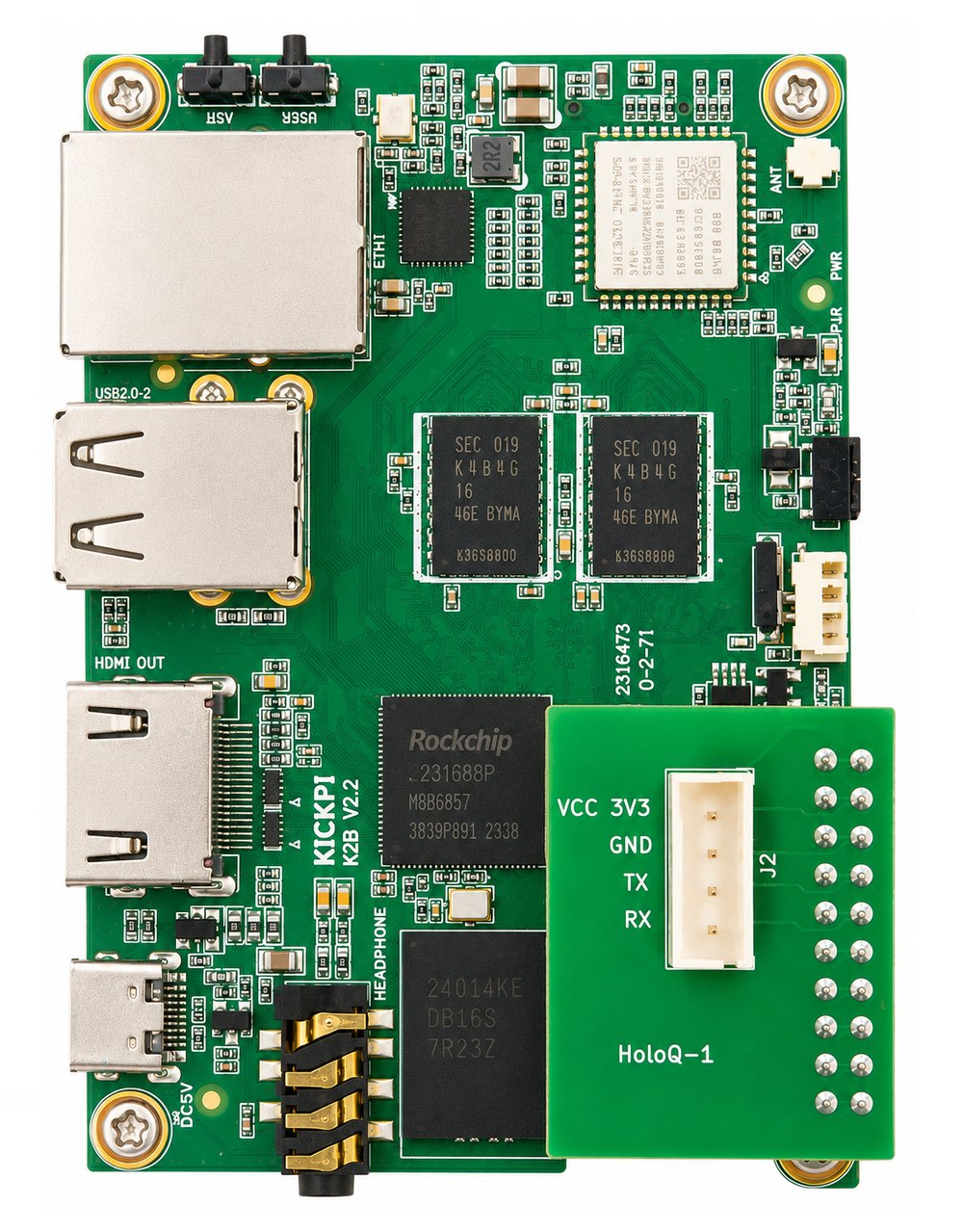
HoloQ Technologies builds media playback systems for the display technology that has to work — always-on signage, interactive kiosks, and installations where "unattended" actually has to mean unattended. We started from a simple frustration: general-purpose media players weren't built for displays that run 24/7, respond to real-world triggers, and can't afford a stutter, a black flash, or a silent crash nobody notices for a week.
HoloQ Player and its companion authoring tool, HoloQ Author, are the result — purpose-built from the ground up for continuous, professional, unattended deployment, with the reliability safeguards that "always-on" actually requires in the real world: continuous health reporting, hardware-level recovery, and a control protocol precise enough to sync a screen with lighting, audio, or a point-of-sale event down to the byte.
Two tools, designed to work as one system — the player that runs the show, and the tool that builds it.
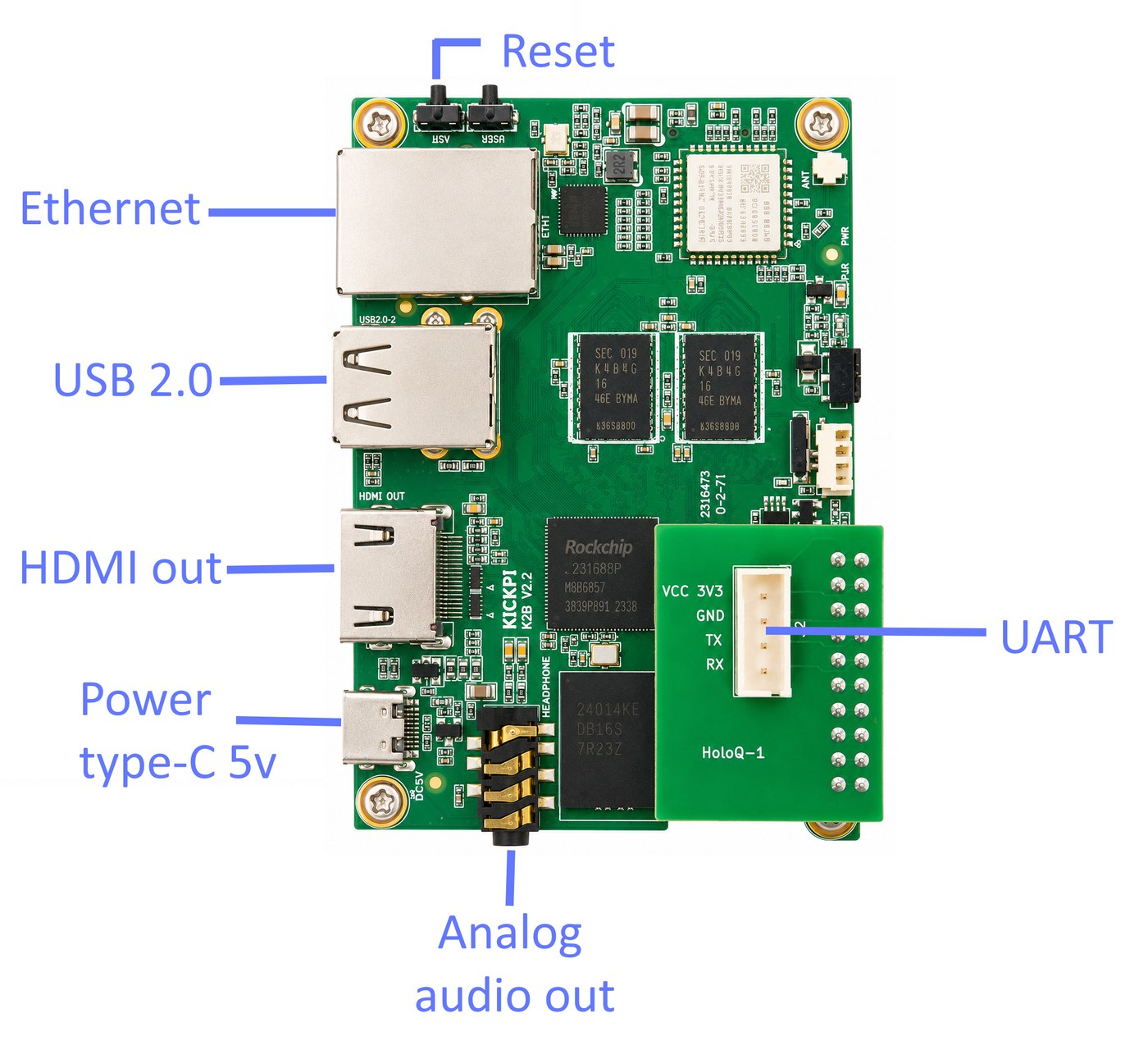
A dedicated media playback device — gapless video and image playback, instant serial-triggered jumps, and continuous health reporting, in three capability tiers to match any deployment's needs.
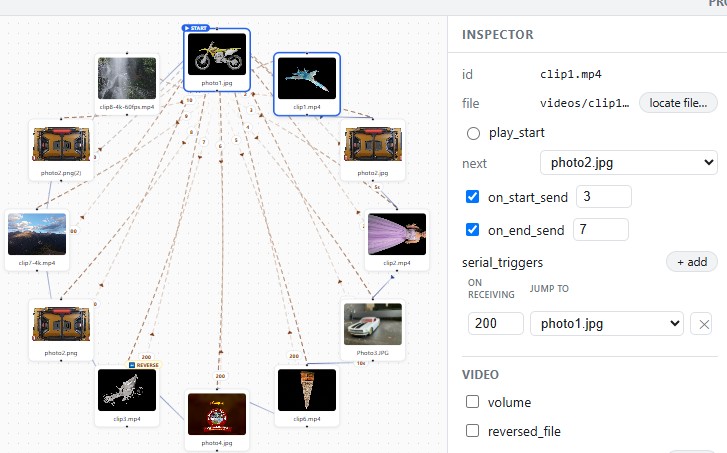
A visual, graph-based desktop editor for building playlists — drag in media, wire up jump triggers and cues, and validate against the player's spec before anything reaches a device.
Health reporting and hardware-level recovery are built into the platform, not bolted on — because a display nobody's watching still has to keep working.
A precise, documented serial protocol means any controller — PC, Arduino, Raspberry Pi, or custom hardware — can drive a HoloQ Player with confidence.
Gapless transitions, frame-accurate reverse playback, byte-level timing — the details that make a display feel intentional instead of assembled.